
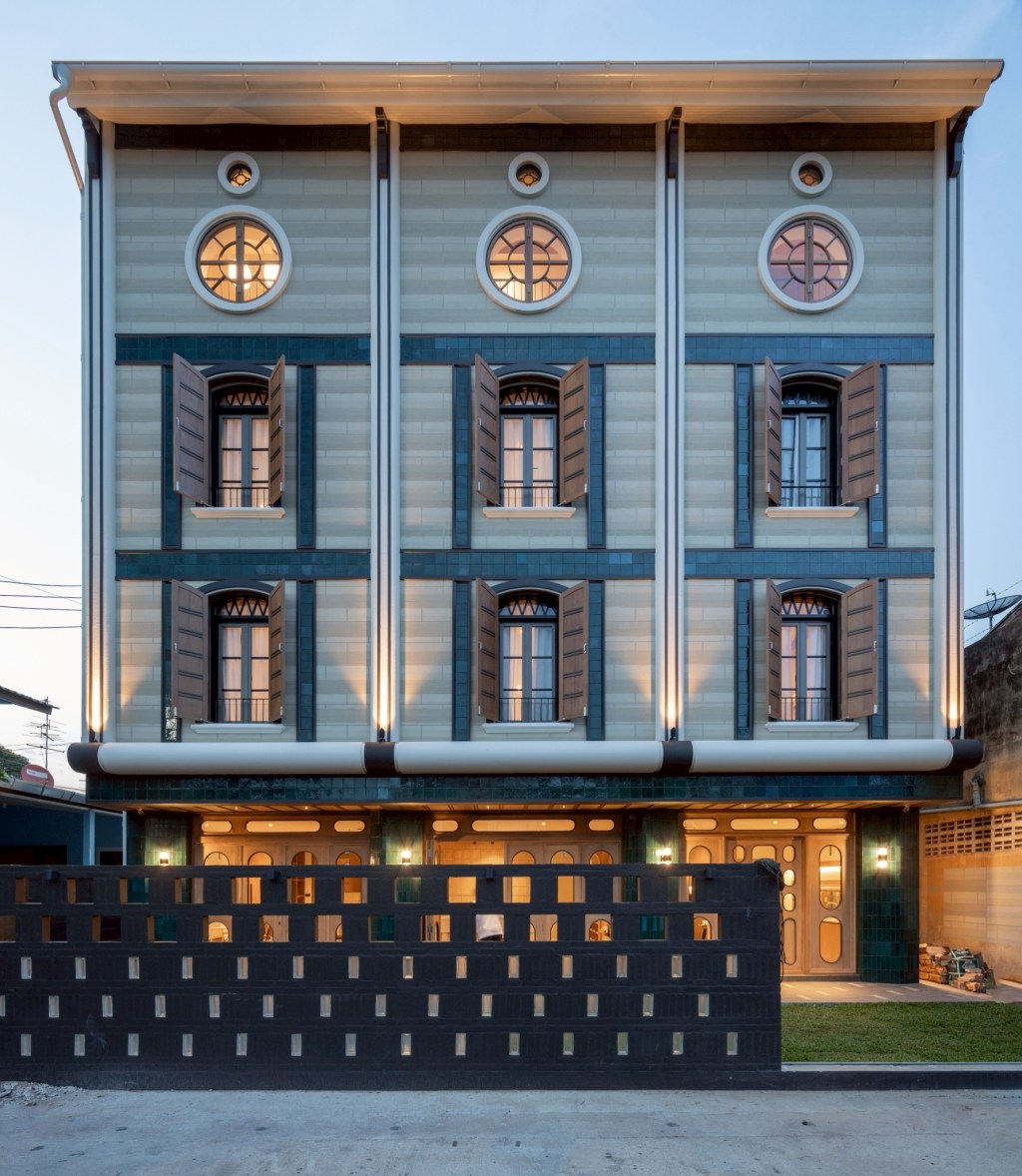
“A Contemporary Hostel Reinterpreting Local Pattern Elements”
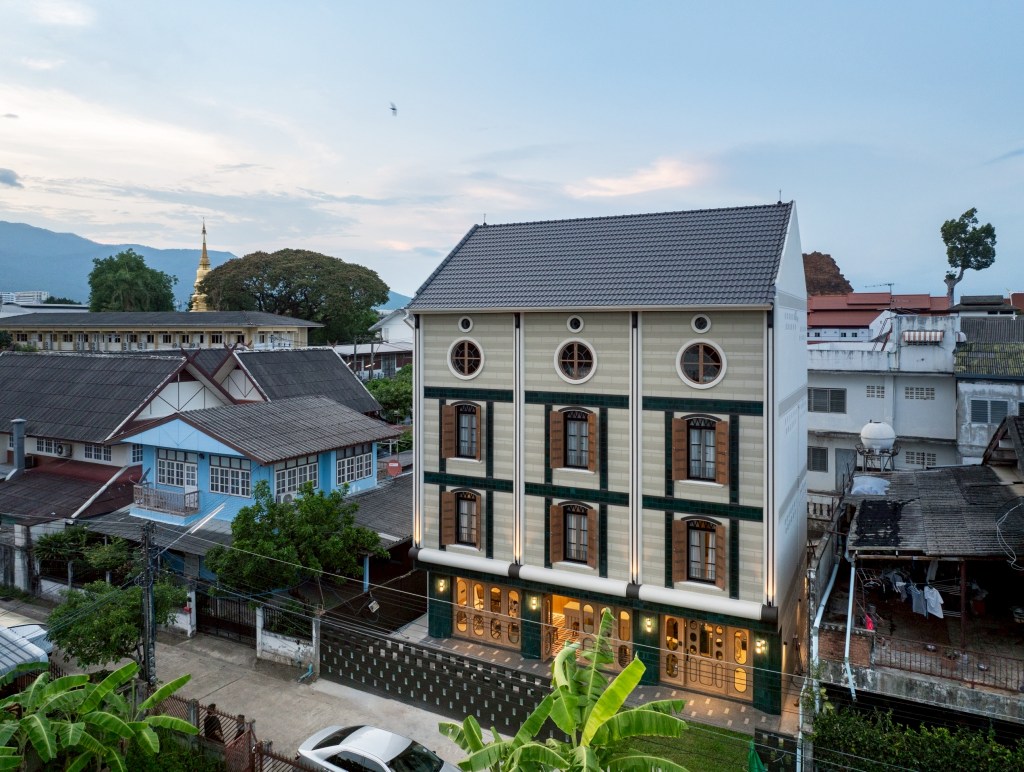
Angmo Hostel Chiangmai is a compact boutique hostel located within the historic core of Chiang Mai. Occupying a 12-meter-wide, four-story building, the project sits in a quiet neighborhood while remaining closely connected to the city’s cultural landmarks.
- Project location Chaingmai, Thailand
- Building Type Hostel
- Completion Year 2025
- Area 410 sq.m.
- Lead Architect Kotchakorn Piraban
- Lead Interior Designer Jarasphong Cheuapool
- Photo credits Rungkit Charoenwat
The surrounding context is defined by layers of time—ancient temples, traditional urban structures, and architectural traces from different periods coexist within the same urban fabric.
Rather than replicating historical forms, the project explores how contemporary architecture can engage with its context through reinterpretation rather than imitation, allowing the building to belong to its surroundings while maintaining a clear identity of its own.
Architecture: Reinterpreting Familiar Language
The design begins by observing the architectural language embedded within the city.
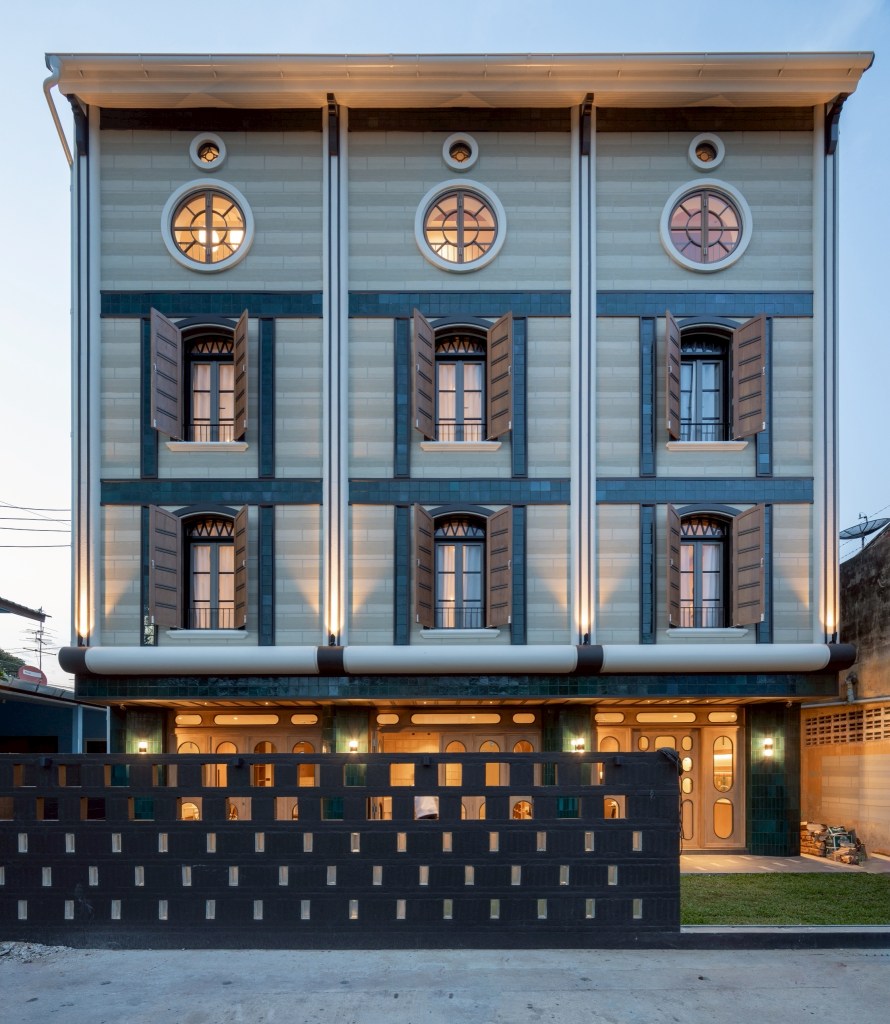
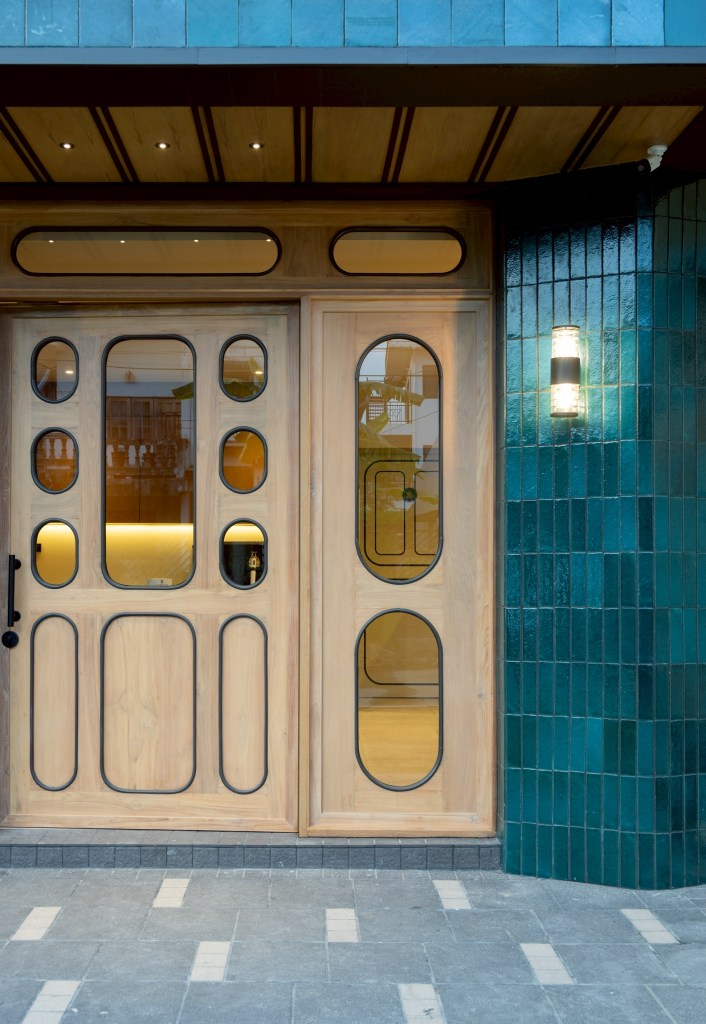
Elements such as symmetrical composition, vertical proportions, and arched openings—commonly found in colonial architecture—are reinterpreted through a contemporary lens and expressed with Lanna-influenced materiality.
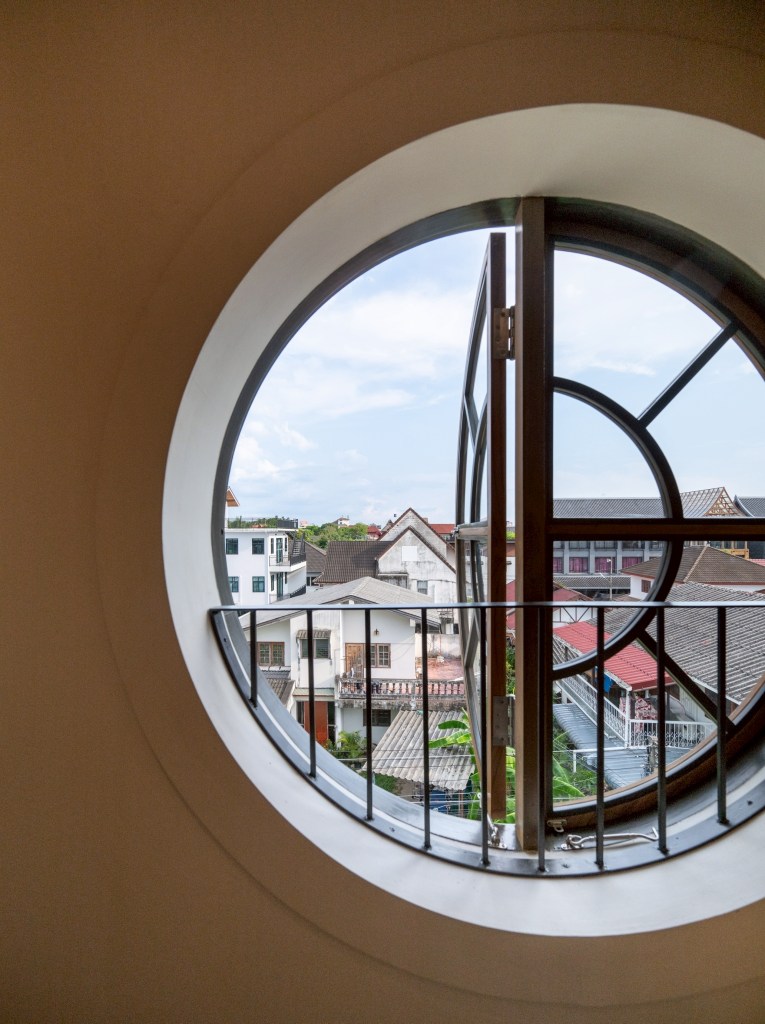
The façade is composed through a rhythmic sequence of vertical frames and circular openings, establishing both order and recognition within the streetscape. Arched windows are developed as a double-layered system, combining operable openings with inner glazing. This allows flexibility between natural ventilation and air-conditioned comfort, while also improving acoustic performance in a dense urban environment
Spatial Strategy: Light, Air, and Efficiency
The spatial organization responds directly to the constraints of a narrow urban plot and the need to maximize usable area.
Side walls are kept solid, while openings are positioned at the front and rear to enable effective cross-ventilation and natural daylight penetration.
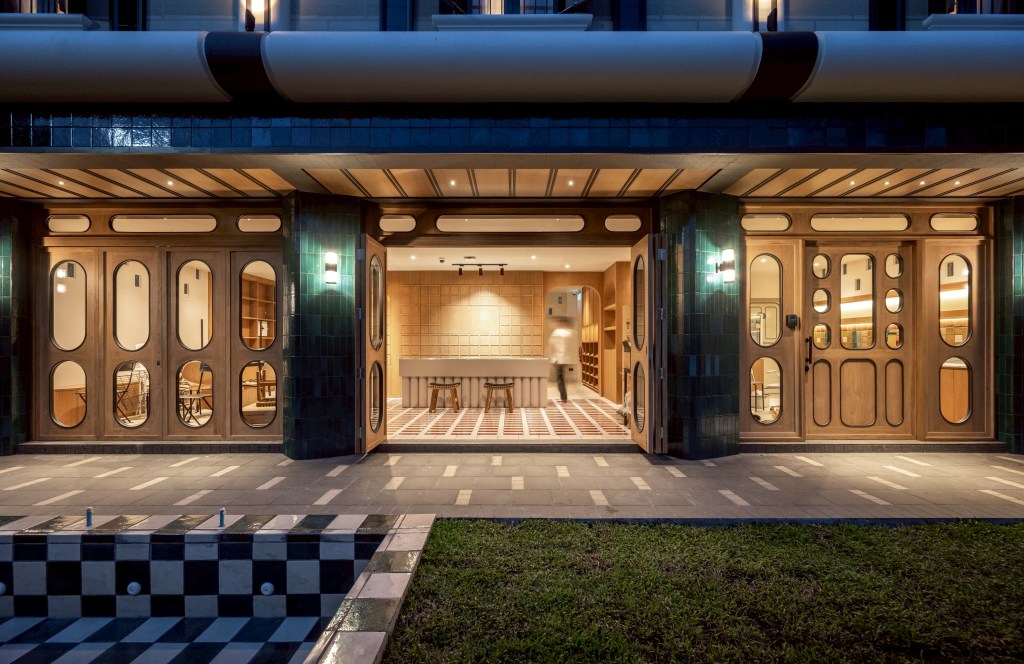
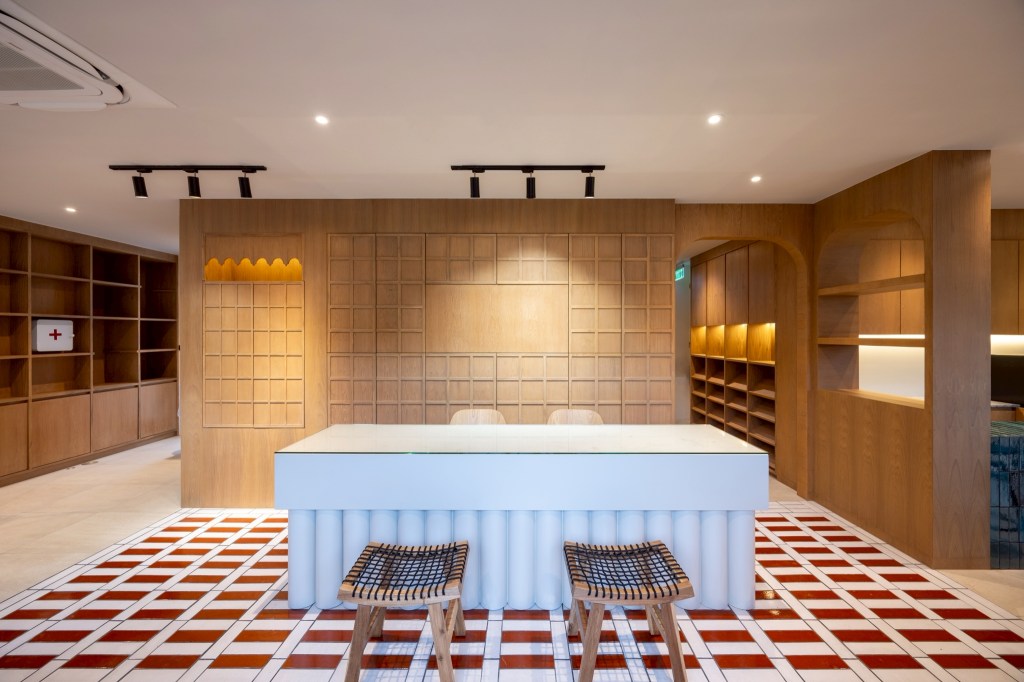
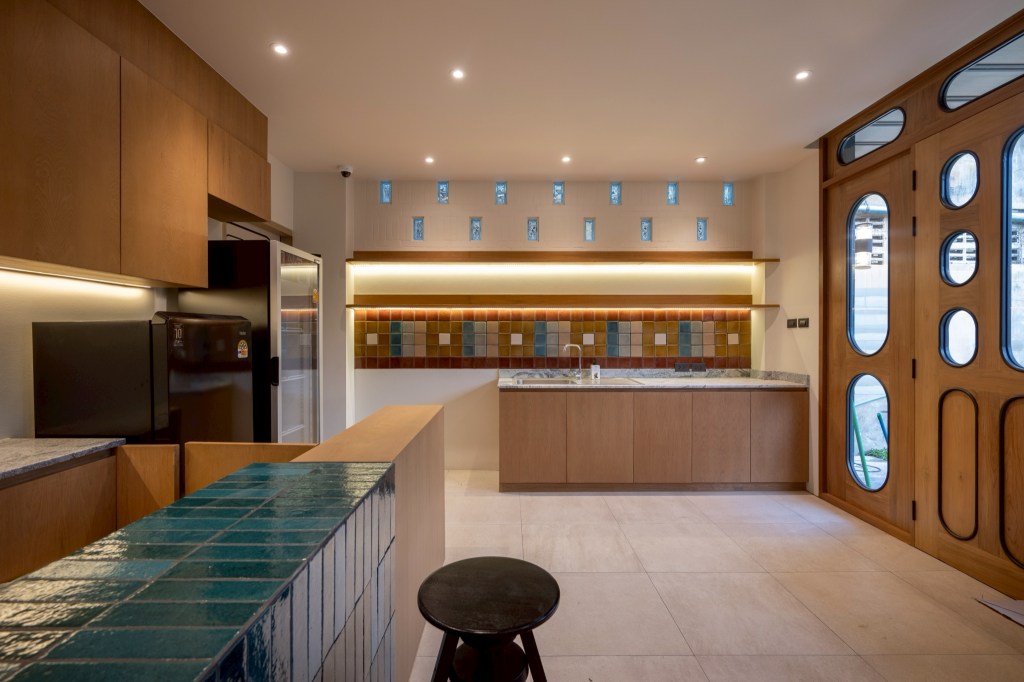
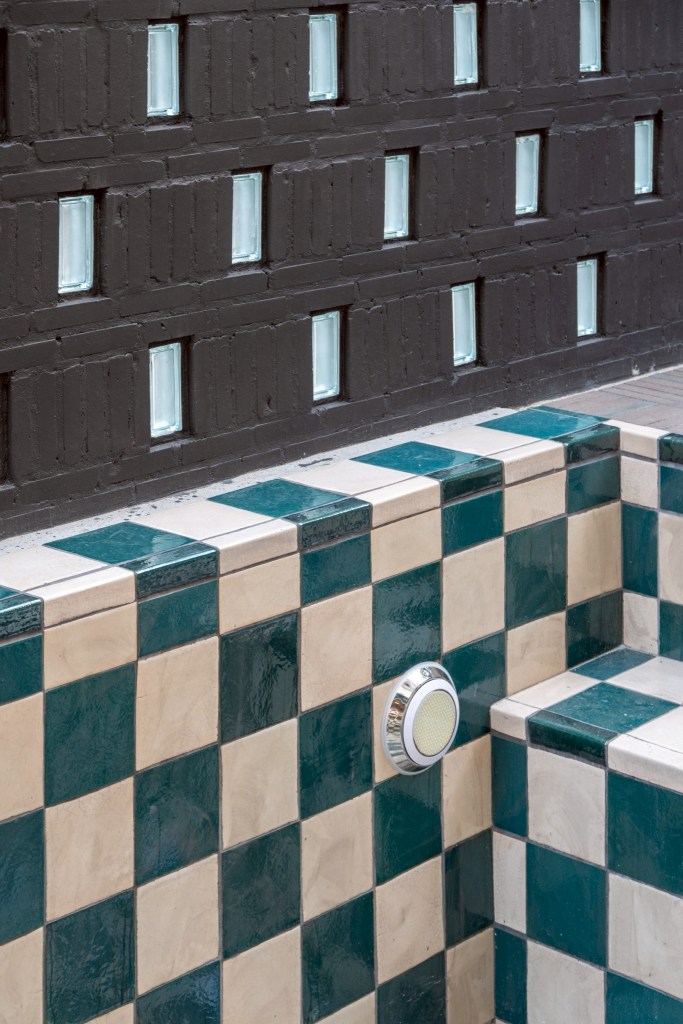
The ground floor functions as a shared communal space, including reception, lounge, pantry, laundry, bathrooms, and dining areas. Folding glass doors with subtle arched detailing extend the interior toward a semi-outdoor terrace, a small plunge pool, and a garden—allowing the space to visually and physically expand beyond its boundary.
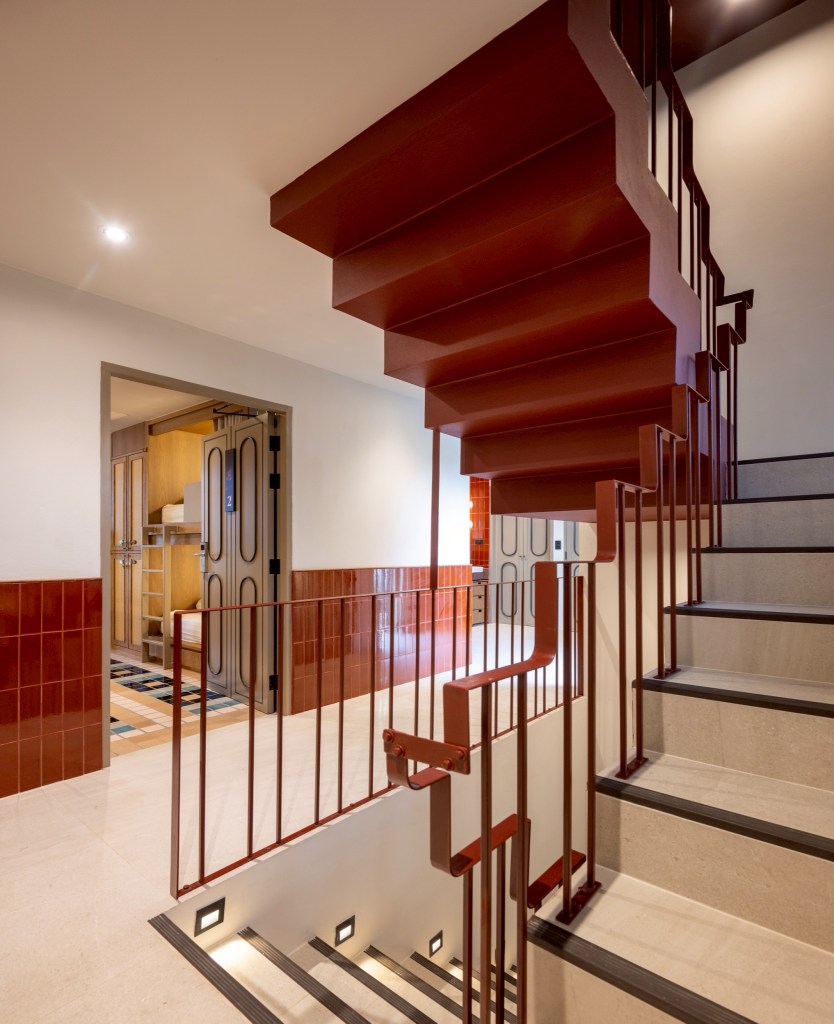
Guest rooms are located on the second and third floors. A central circulation core is positioned at the rear, with bathrooms placed on both sides. This arrangement frees the front façade for the dormitory spaces, ensuring access to natural light and outward views.
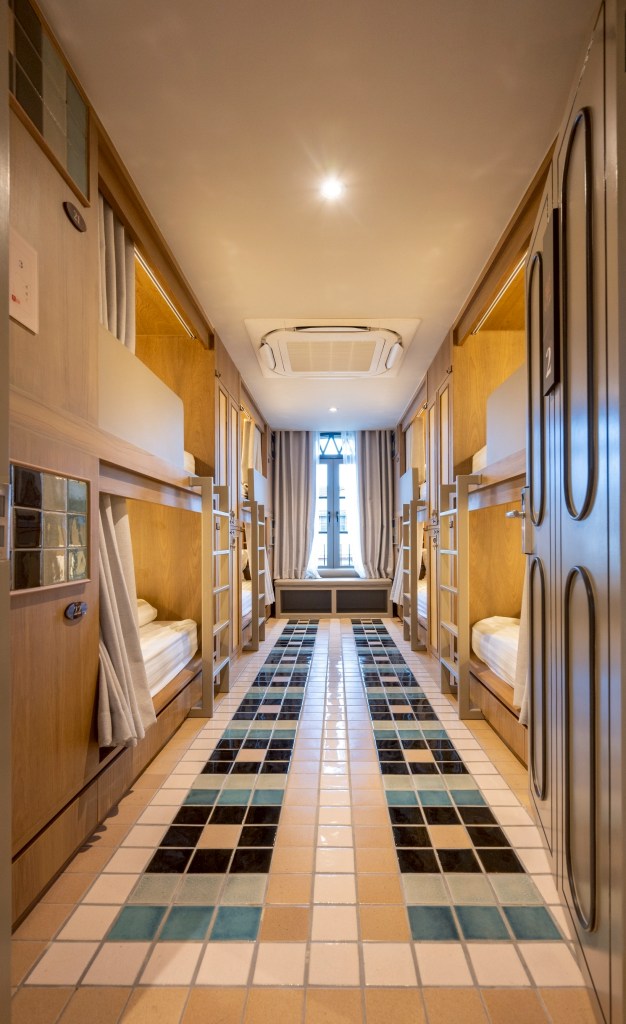
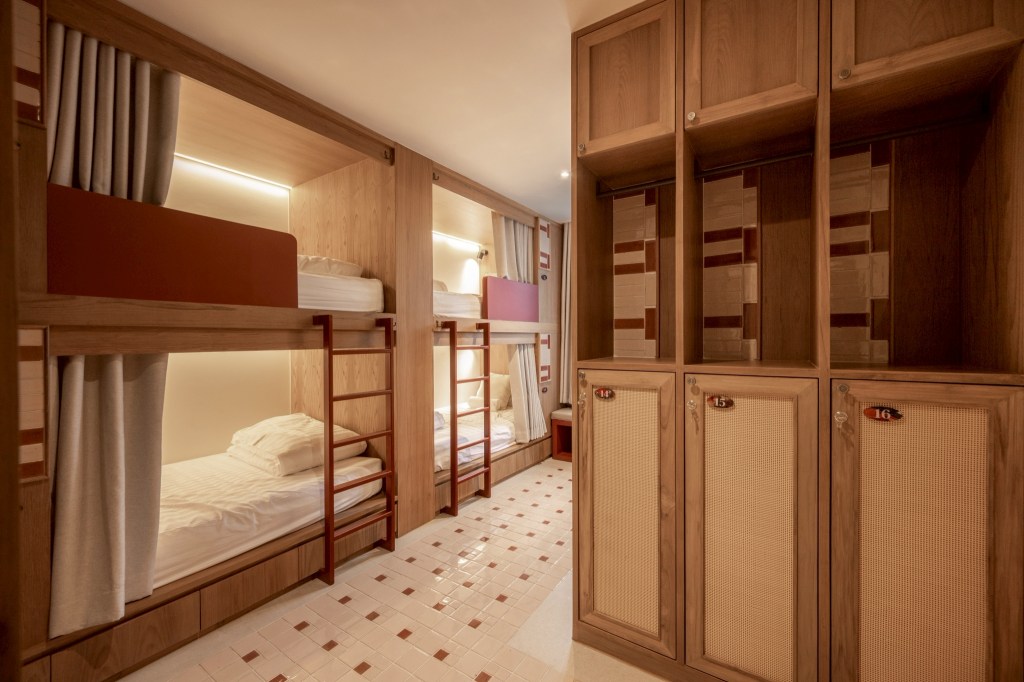
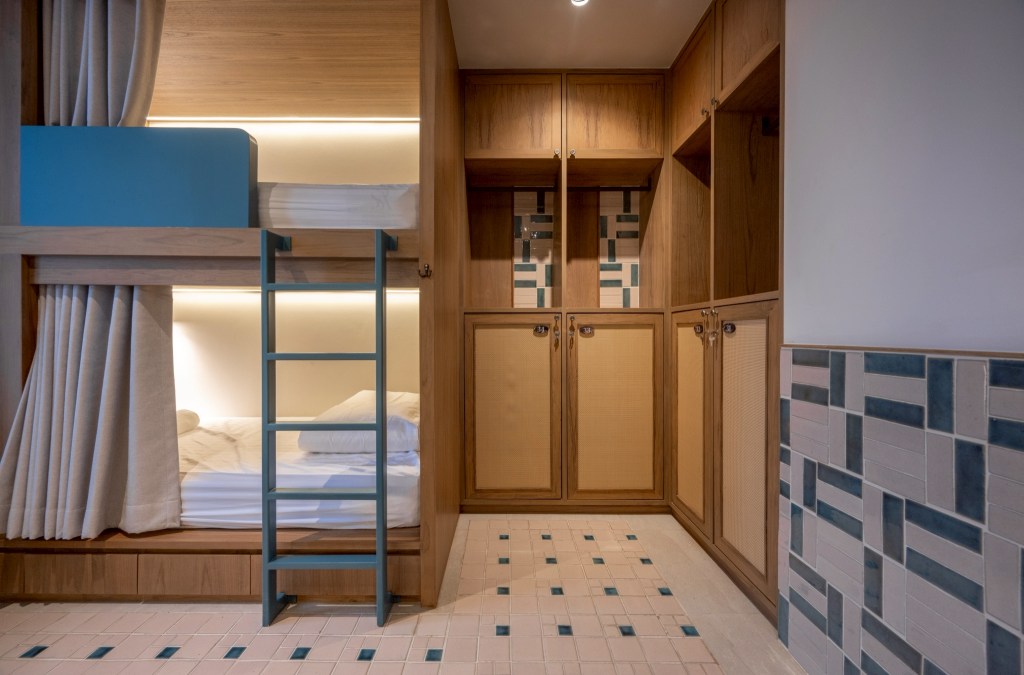
Rooms are configured into 6-bed and 8-bed layouts, each defined by a distinct color identity—maroon red, beige, and peacock blue. Beds are arranged along both sides with a central corridor leading toward a window at the end, enhancing depth and spatial openness despite the compact footprint.
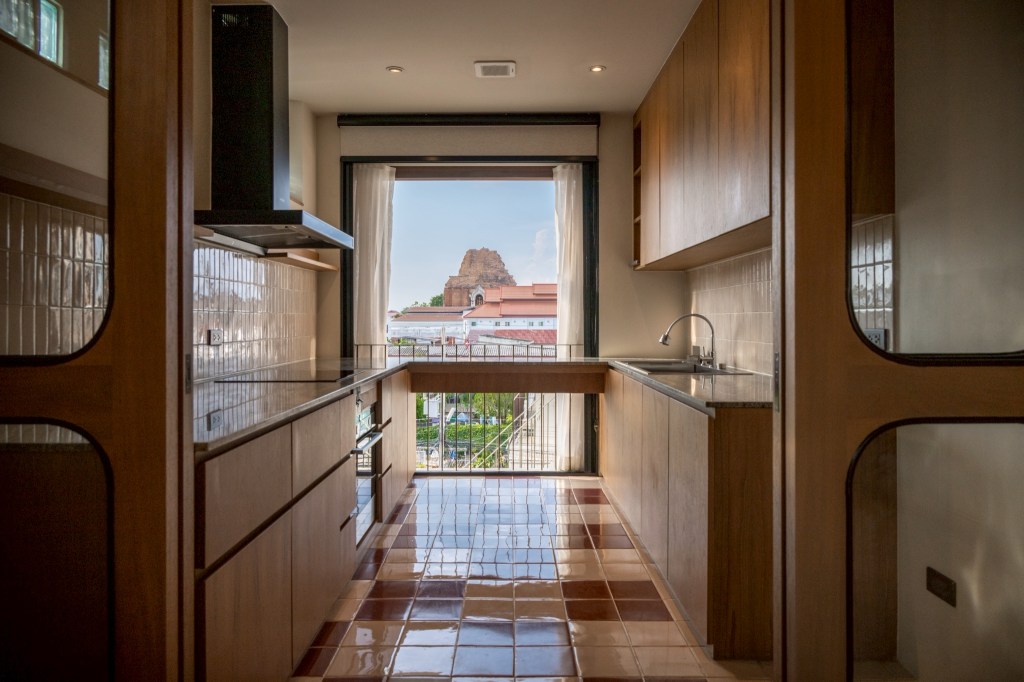
The fourth floor serves as the owner’s private residence. Designed in a restrained palette of white and beige, combined with natural wood built-ins, the space includes a bedroom, walk-in closet, bathroom, living area, and kitchen. Views extend toward Wat Chedi Luang, one of Chiang Mai’s most significant landmarks, while three circular windows introduce a distinctive architectural character.
Materiality: Texture, Pattern, and Local Craft
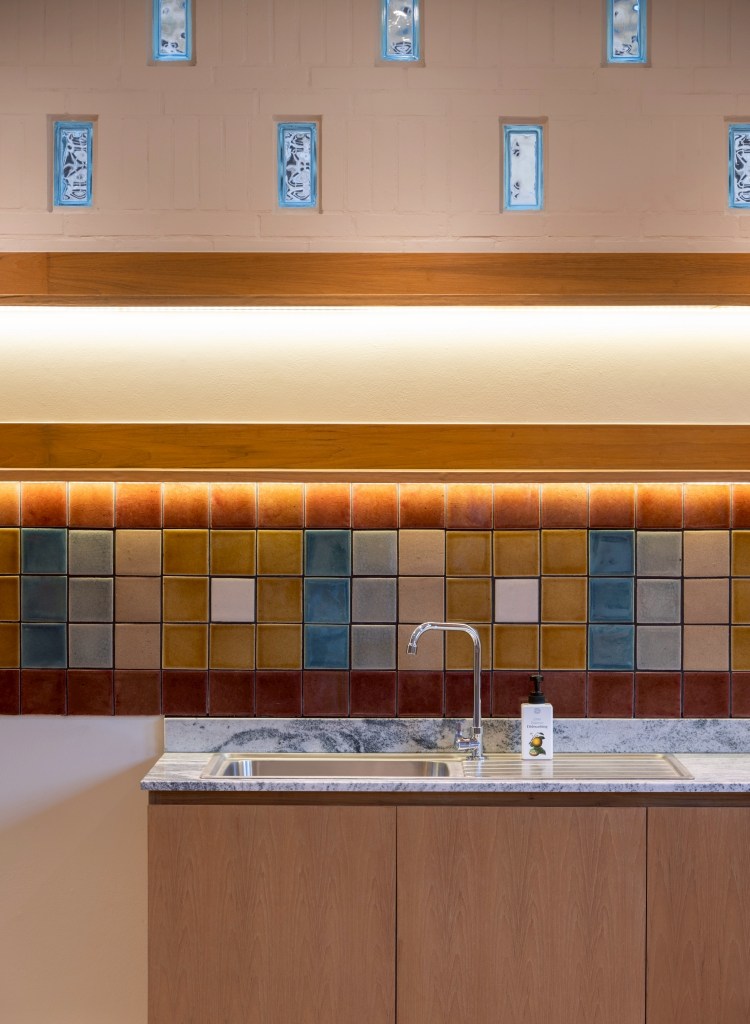
The building’s material palette is rooted in locally sourced elements—terracotta tiles, brick, and glass blocks—assembled into layered patterns across different surfaces.
These small-scale materials create tactile richness at close range while maintaining a calm and cohesive composition at the building scale.
Certain façade surfaces incorporate textured finishes with subtle gradients transitioning from earthy brown to soft white, evoking the image of stratified soil layers—a metaphor for the passage of time from past to present.
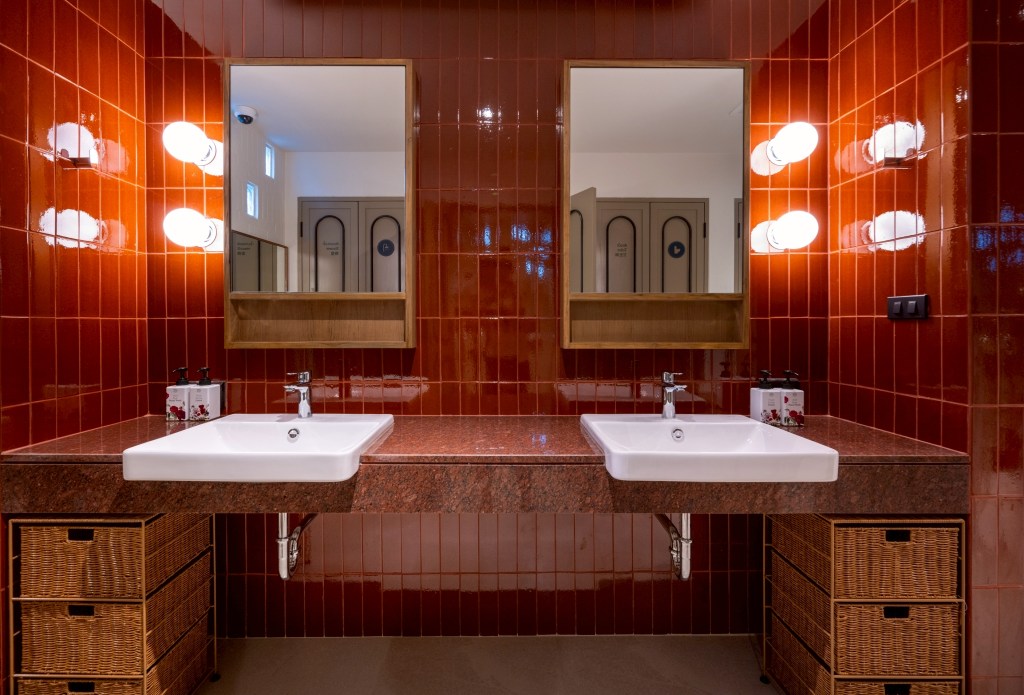
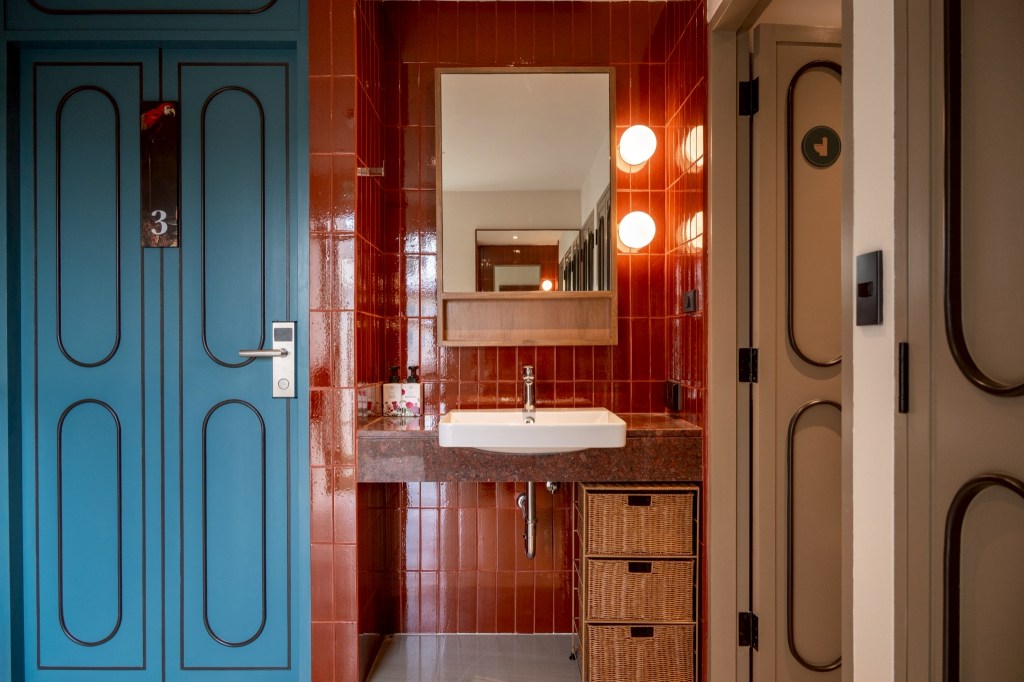
Inside, the atmosphere is defined by light-toned surfaces and natural wood, creating a warm and quiet environment. This is contrasted with colorful ceramic tiles—such as Umthumphon red, tin grey, burnt brown, and peacock blue—arranged into distinct patterns that vary across spaces. Selective use of color accents, including the maroon staircase and peacock blue doors, introduces moments of identity, orientation, and memory within the interior
Construction Considerations
The project faced logistical challenges due to its location within Chiang Mai’s old town, where access streets are typically narrow (approximately 3–5 meters wide) with sharp turning angles.
These conditions significantly impacted material transportation and construction processes, particularly for foundation works requiring long piles. As a result, construction sequencing and planning were carefully coordinated to accommodate these constraints.
Conclusion
Angmo Hostel Chiangmai does not attempt to recreate the past.
Instead, it positions itself as a contemporary architectural insertion within a historic environment—one that quietly integrates into the old city while maintaining a careful balance between respect for context and independence of identity.
 BBWORKSPACE :
Leave a comment